Looking for a Bay Area job fair that actually fits your goals, instead of sending you home with a tote bag and no real leads?
Bay Area job fairs still work because they create live contact with recruiters, hiring managers, alumni, and workforce teams who can answer questions on the spot and remember a strong conversation later. A key advantage is not attendance alone. It is choosing the right fair for your target, then showing up with a plan that matches the format.
For jobseekers, that means preparing differently for a campus fair, a public workforce event, and a community or identity-focused hiring event. A Stanford engineering fair rewards a tighter pitch and role-specific resume. A public fair like work2future often calls for broader positioning, faster screening conversations, and more flexibility across industries. Community fairs can offer stronger relationship-building, but they also require better follow-up because employers may be hiring across several teams rather than one defined requisition.
For organizers, execution usually decides whether a fair feels well-run or chaotic. Good employers and strong turnout can still be undercut by long entry lines, weak attendee tracking, and uneven booth traffic. If you are planning one of these events, a QR code lead capture setup for trade shows and hiring events can speed up check-in, reduce manual errors, and give employers cleaner follow-up data.
This guide covers Bay Area job fairs worth prioritizing in 2026, then goes a step further. It breaks down which events make sense for different jobseekers and what organizers need to get right, especially at check-in and on-the-day operations. If you're also aiming at startup roles between events, you can explore tech jobs with Underdog.io.
Table of Contents
- 1. UC Berkeley Career Engagement
- 2. Stanford Career Education
- 3. San José State University Career Center
- 4. San Francisco State University
- 5. work2future
- 6. City of Oakland LGBTQ+ Job Fair
- 7. North Bay Job Fair
- Bay Area Job Fairs, 7-Event Comparison
- Your Next Step to a Bay Area Career
1. UC Berkeley Career Engagement
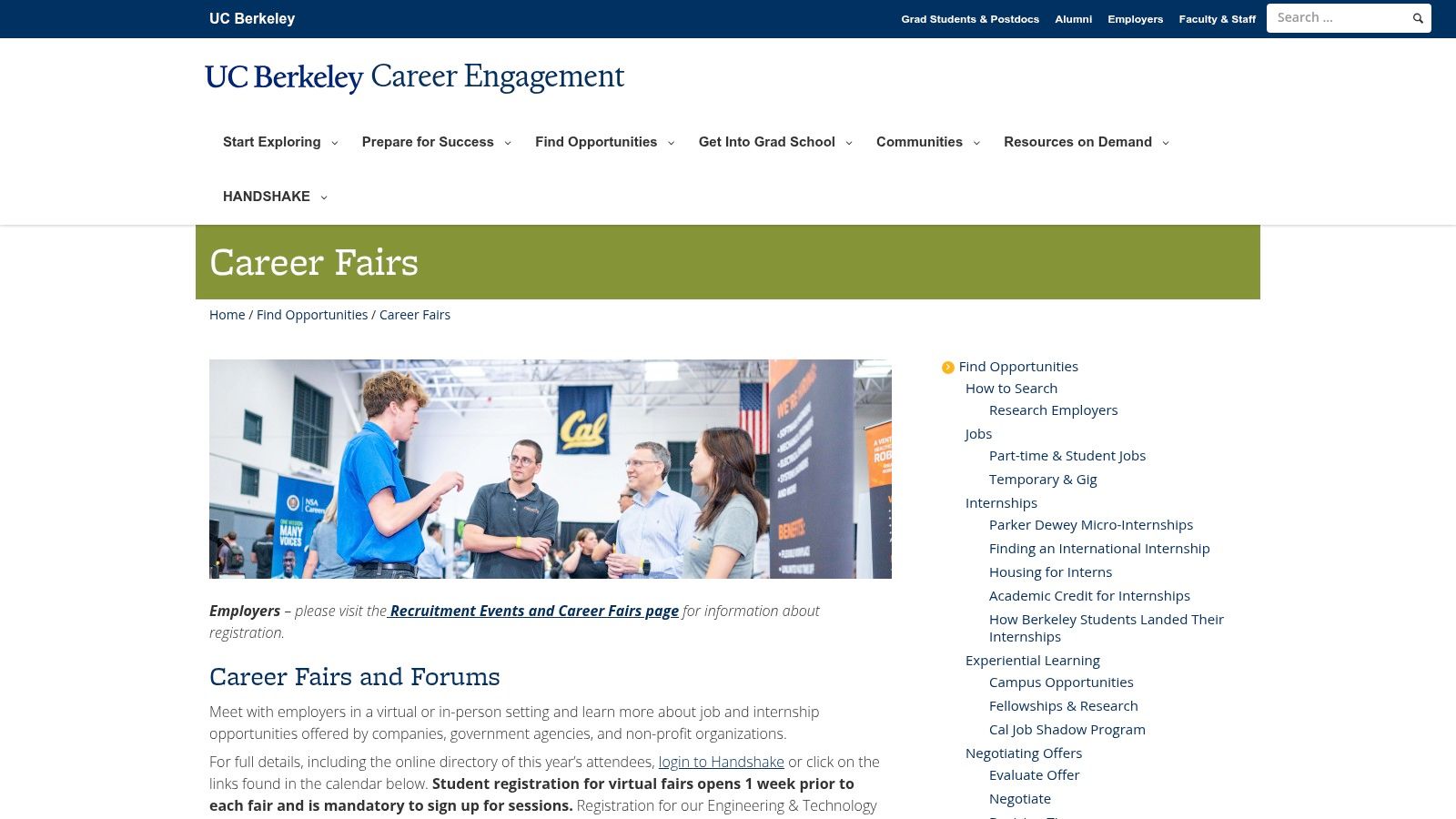
UC Berkeley runs some of the most targeted Bay Area job fairs in higher education. Instead of pushing everyone into one giant general event, Berkeley Career Engagement separates fairs by discipline and hiring context, which usually leads to better conversations for students who know what they want.
That segmentation is the main advantage. A STEM candidate, a public service candidate, and an arts candidate don't need the same employer mix, and Berkeley's format reflects that. You can review current details through UC Berkeley Career Engagement career fairs.
Best for focused campus recruiting
For Berkeley students and eligible alumni, this is one of the strongest options if you want a cleaner employer match. Employer lists and Handshake postings tend to help you plan before you arrive, which matters because the weakest fair strategy is wandering the room and improvising.
- Use the roster first: Shortlist employers before the event day and tailor your introduction by sector.
- Bring a versioned résumé: One résumé for software, another for research, another for nonprofit or policy work.
- Expect lines at top booths: Prioritize your first five targets early, then use slower periods for second-tier employers.
Practical rule: If a fair is segmented by discipline, don't use a one-size-fits-all pitch. Recruiters can tell immediately.
For organizers, Berkeley-style segmentation also solves a common crowd problem. It spreads traffic better than one broad fair and gives employers a more relevant pool. If you're running a similar event, QR code lead capture for trade shows and expos helps staff track employer conversations without relying on paper sign-in sheets that nobody cleans up later.
The trade-off is access. These fairs are usually strongest for people already inside the Berkeley ecosystem, so they aren't the best fit for the general public.
2. Stanford Career Education
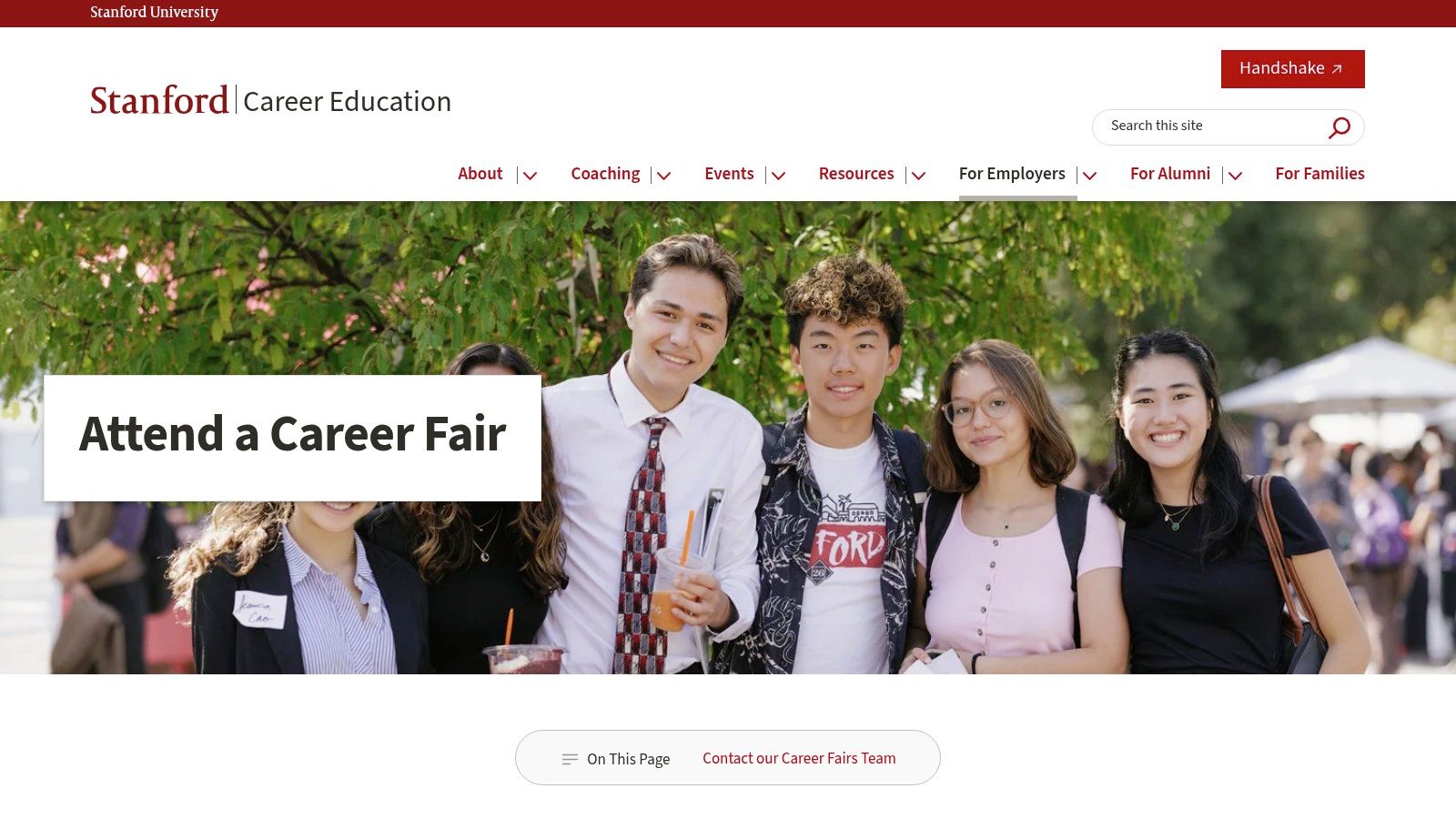
Stanford Career Education is a good example of a fair system that favors quality over breadth. The employer mix tends to be curated, the scheduling is predictable, and the surrounding info sessions can be as useful as the fair itself if you're targeting research, startups, or technical hiring teams.
That curation is the reason many candidates value Stanford's events. You spend less time sorting through booths that aren't relevant and more time talking to employers that already recruit this campus through Stanford Career Education career fairs.
Where this fair works best
This is one of the better Bay Area job fairs for candidates who already have a clear target function. Engineering, product, research, and startup-oriented roles tend to fit naturally. Recent alumni can also benefit if they still have access and want concentrated recruiter time rather than broad public-fair traffic.
A few practical notes matter here:
- Prepare for technical screening language: Some recruiters will jump straight into project work, labs, stacks, or thesis topics.
- Use Handshake well: Review the schedule, not just the company list.
- Don't skip adjacent events: Info sessions often give you better context for follow-up than the booth conversation alone.
The strongest candidates at curated fairs don't try to impress everyone. They identify a narrow set of employers and show obvious fit.
The downside is obvious. Access is generally limited, and employers often commit their spots quickly. If you aren't part of Stanford's student or recent alumni pipeline, this isn't the fair to build your entire Bay Area search around.
3. San José State University Career Center
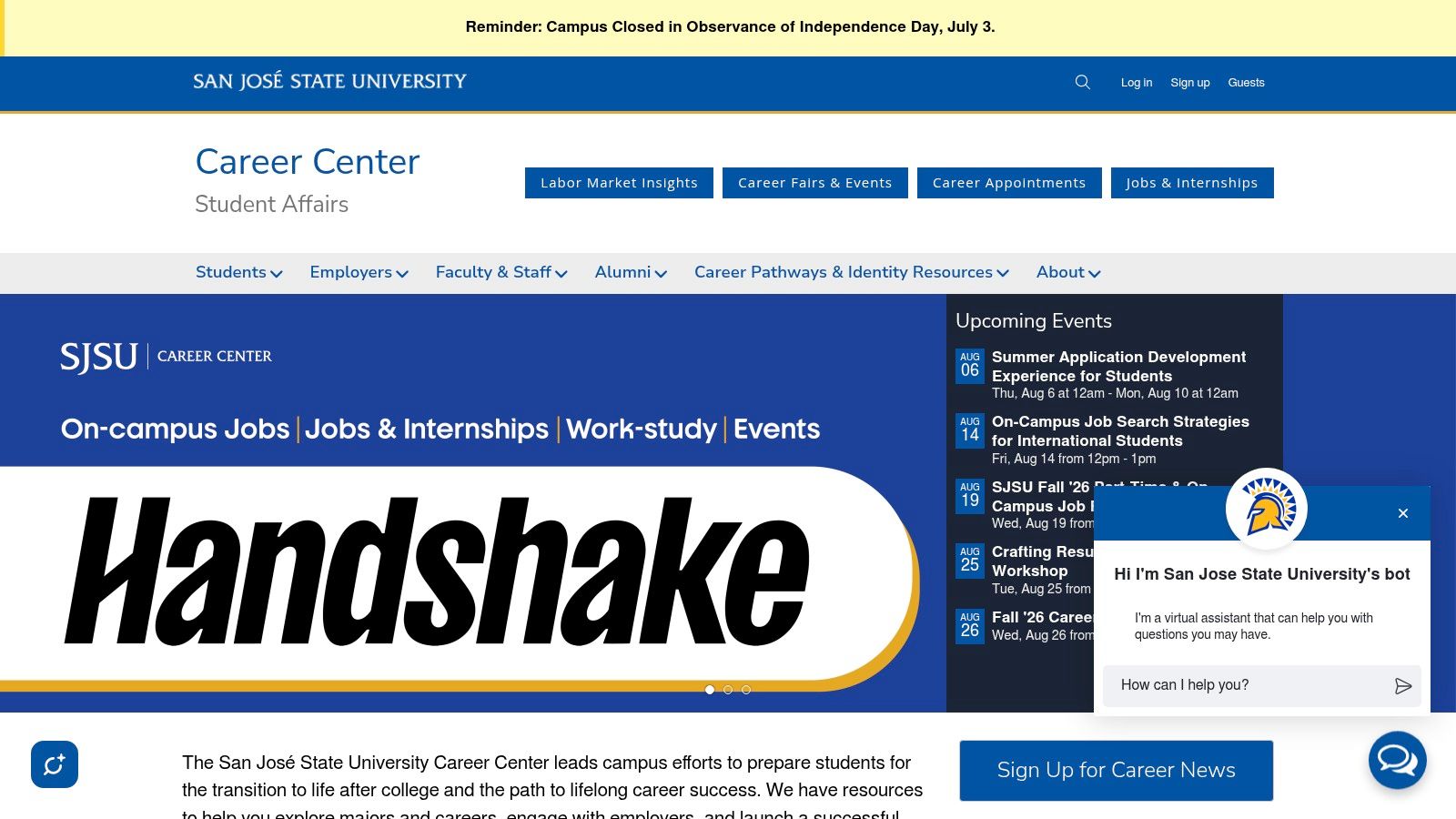
San José State University sits in a practical recruiting lane that many jobseekers underrate. If Berkeley and Stanford can feel brand-heavy, SJSU often feels closer to the daily hiring needs of Silicon Valley employers across software, hardware, manufacturing, and public agencies.
That's why the SJSU fairs are especially useful for internships and first full-time roles. The event mix usually serves students who want local employer access without needing a polished executive-style networking approach. Current details live on the San José State University Career Center.
Best fit for Silicon Valley pathways
What works here is the blend of internship and full-time recruiting. Students can test the market early, and employers can meet candidates at different class levels. The downtown San José location also makes it logistically easier for many South Bay employers to attend.
If you're attending, use a straightforward plan:
- Open with work readiness: State your major, graduation timing, and whether you want internship or full-time consideration.
- Know your local employers: SJSU fairs reward candidates who understand the Silicon Valley companies showing up.
- Apply before and after the fair: Booth conversations work best when they support an active application, not replace one.
Organizers can learn from that clarity. Discipline-based scheduling and clean registration flows reduce confusion for both employers and students. If you're building a campus or community event, online event registration for Google Forms and Sheets is a practical way to centralize sign-ups without forcing attendees into another unfamiliar platform.
SJSU's main limitation is crowd density. Popular booths get packed fast, so candidates who show up with no priority list often waste the first hour.
4. San Francisco State University
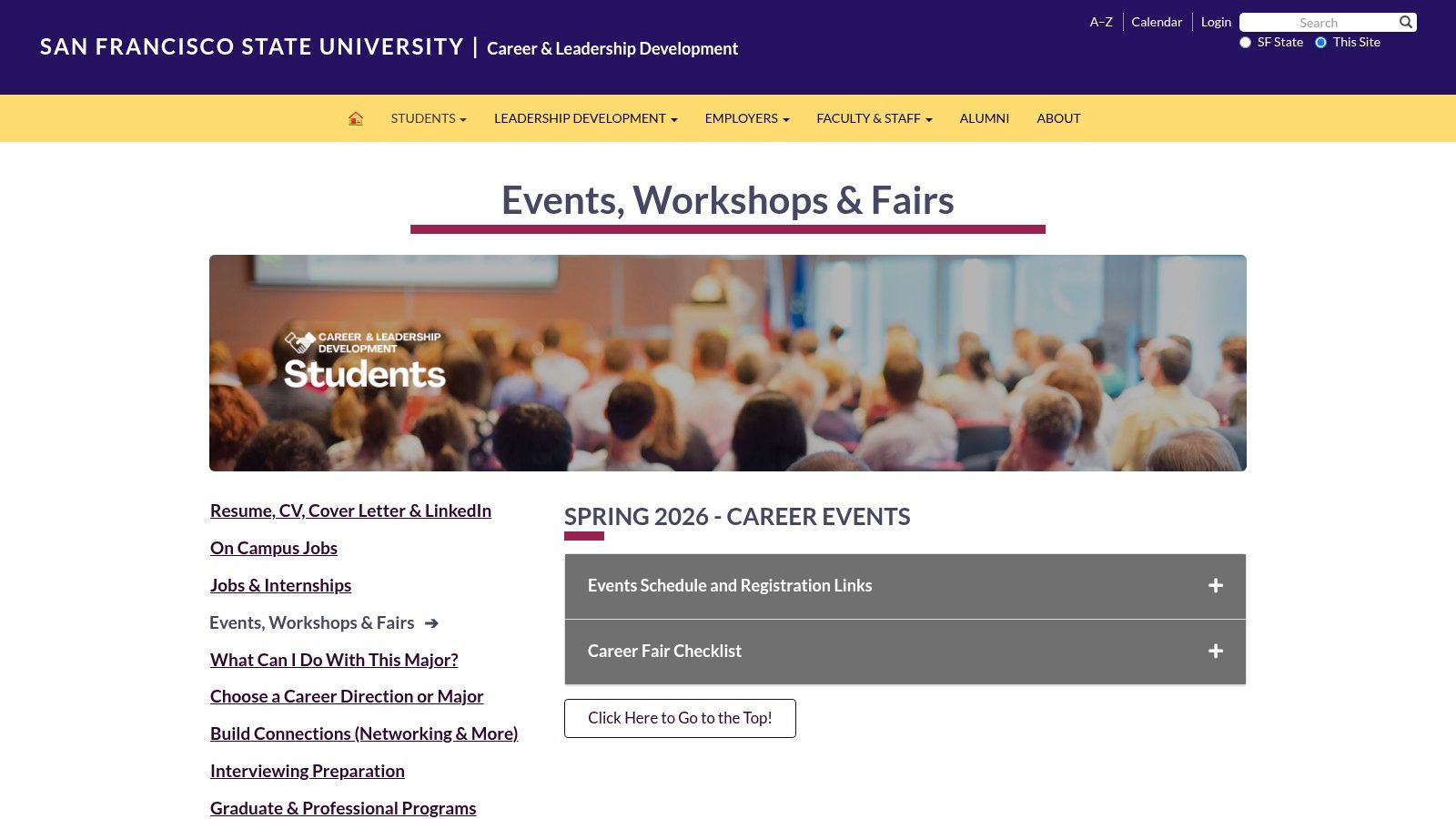
San Francisco State University deserves more attention from jobseekers who want options beyond the standard tech pipeline. Its fairs usually span part-time work, internships, and broader career hiring, which creates a more mixed employer environment than the heavily technical campus events.
That variety is useful if your search touches education, healthcare, hospitality, nonprofits, or local agencies. You can track fair schedules and registration through San Francisco State University career fairs.
A better option for broad sector hiring
SFSU is often a smarter pick when your search doesn't fit the classic startup or engineering script. Transit access is a real advantage too. Employers and attendees coming from across the Bay don't need the same car-dependent planning that some other events require.
There's another practical reason to watch this school's calendar. Bay Area healthcare jobseekers still face a coverage gap in specialized fair listings, with fragmented information and no central directory, a problem highlighted in a Bay Area discussion about health-specific job fairs. That makes broader campus events like SFSU's more useful for candidates in medical support, public health, and adjacent service roles when niche events are harder to track.
Broad fairs reward flexibility. If you can speak to two or three adjacent roles, you'll usually leave with more leads.
The trade-off is consistency. One SFSU fair may have a strong public-sector mix, while another leans more toward campus-friendly general hiring. Check the employer list before committing your day.
5. work2future
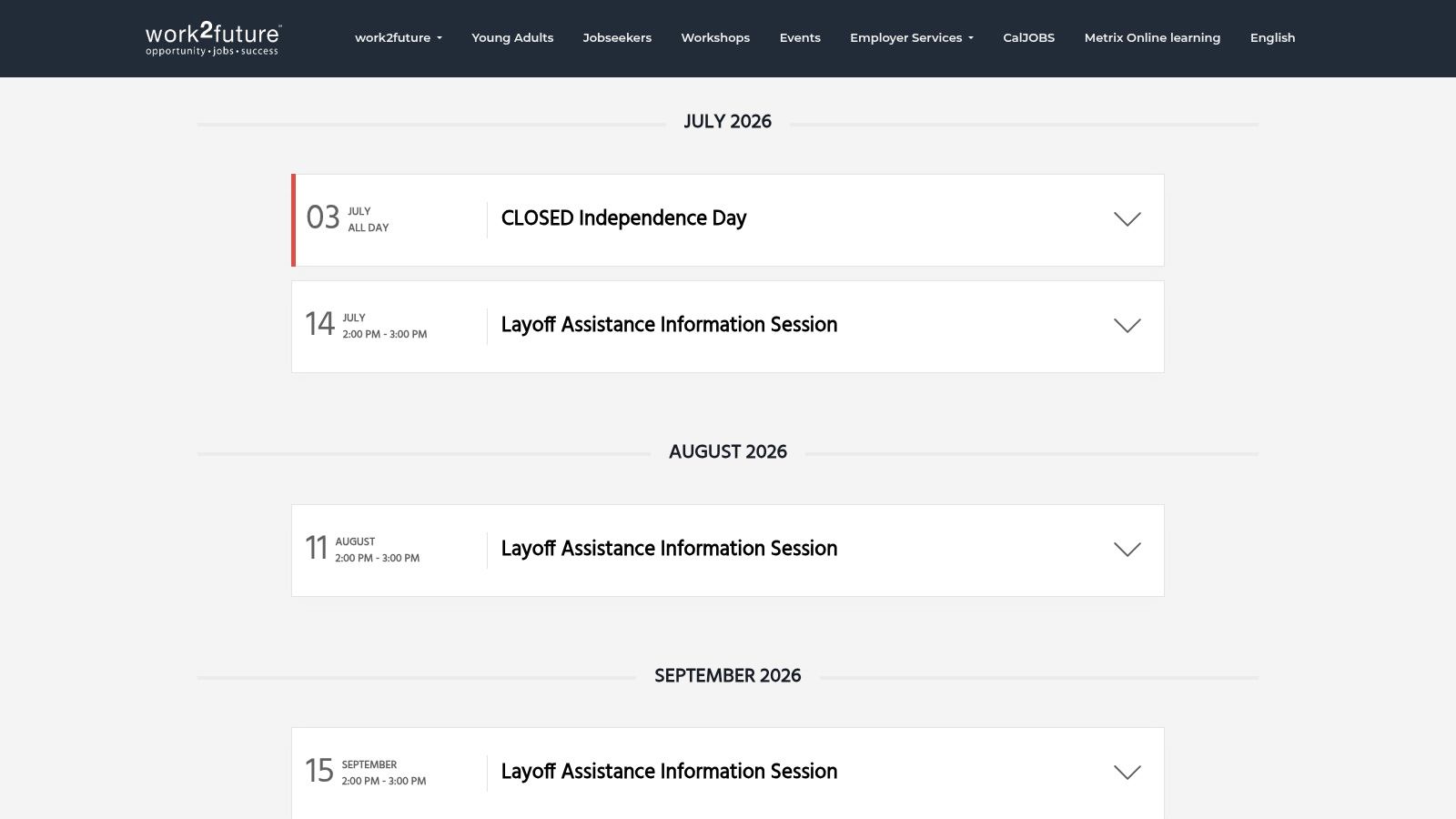
If you need public access instead of campus access, work2future is one of the strongest Bay Area job fairs channels to monitor. Because it operates through San José's workforce system, its events often combine employers with practical support services, which makes them useful for people changing industries, returning to work, or looking beyond tech.
You can watch upcoming dates through the work2future event calendar. That's worth doing because employer rosters can shift close to event day.
Most useful when you need public access
What work2future does well is remove some of the friction that keeps people from benefiting from a fair. Public events, workforce staff, résumé help, and apprenticeship visibility all make these fairs more usable for jobseekers who don't already know how to handle recruiter conversations.
This is also where the long-term value of fairs becomes clear. Experimental evidence shows that attending a job fair can increase reported formal sector employment by 10.6 percentage points ten months later, and the main benefit comes from information and network expansion rather than direct hiring through a booth conversation, according to experimental research on job fair attendance and employment outcomes. That matches what many community workforce events are built to do.
- Use support services before the booths: Fix your résumé first if it's weak.
- Ask for next-step clarity: Community fairs are strongest when you leave knowing how to apply, qualify, or enroll.
- Track every lead: Public fairs create more varied opportunities, so your notes matter.
For organizers, community events live or die on front-door operations. A slow line sets the wrong tone immediately. QR code attendance tracking in Google Sheets makes check-in faster and gives staff a usable attendance record after the event instead of a stack of paper forms.
6. City of Oakland LGBTQ+ Job Fair
The City of Oakland LGBTQ+ Job Fair stands out because it doesn't treat inclusion as branding copy. It centers employers and partners that are explicitly trying to create a more supportive hiring environment, while also offering practical services such as résumé review and interview preparation.
That makes it a strong option for jobseekers who want to screen for workplace culture early, not after several rounds of interviews. Event information is available through the City of Oakland LGBTQ+ Job Fair page.
Why this one matters
Many fairs say they welcome everyone. That's not the same as creating an environment where candidates can ask direct questions about culture, benefits, support, and safety without feeling like they're taking a risk.
This fair is useful across sectors, but it's especially helpful for candidates who want local government, nonprofit, training-provider, and community-partner visibility in one place. The once-a-year cadence means you can't rely on it alone, so it works best as part of a broader Bay Area search strategy.
Ask employers how inclusion shows up in management practice, not just in a careers page statement.
The main trade-off is employer mix. Depending on the year, it may lean more heavily toward local institutions and mission-driven employers than private-sector tech recruiting. For many attendees, that's a benefit. For others, it means pairing this event with a university or workforce fair.
7. North Bay Job Fair
The North Bay Job Fair fills a gap that many San Francisco and Silicon Valley lists ignore. If your search is rooted in Sonoma, Marin, Napa, or Mendocino counties, a regional fair can be more useful than crossing the Bay for a brand-name event that isn't hiring in your geography.
You can follow the event through the North Bay Job Fair from Amaturo Sonoma Media Group.
Strong regional value
This fair works well for jobseekers who want a wide employer mix in a single room. Healthcare, public sector, hospitality, skilled trades, and services all tend to fit the regional profile better than a hyper-specialized tech fair would.
It's also a practical option for employers that need local reach rather than university prestige. A North Bay employer often benefits more from geographic relevance than from attending a fair centered on Peninsula students.
There's also a broader inclusion angle worth noting. Bay Area coverage still underserves immigrant and refugee professionals with IT and engineering backgrounds, even though Bay Area Council workforce programming highlights career fairs focused on increasing workforce opportunity, diversity, and inclusion. When jobseekers have to piece together fragmented event sources, regional fairs become more valuable as one-stop access points.
For candidates, the caution is simple. If you only want San Francisco or South Bay roles, this may not be the best use of your time. If you want North Bay employment, it's one of the clearest options to watch.
Bay Area Job Fairs, 7-Event Comparison
| Program / Event | Implementation complexity 🔄 | Resource requirements ⚡ | Expected outcomes ⭐ | Ideal use cases 💡 | Key advantages 📊 |
|---|---|---|---|---|---|
| UC Berkeley Career Engagement, Career Fairs | Moderate, multiple in‑person & virtual logistics | Moderate–High, venues, staffing, Handshake integration | ⭐⭐⭐, strong sector matches and employer access | Berkeley students & eligible alumni seeking sector‑specific recruiting | Strong brand draw; clear segmentation by major/sector |
| Stanford Career Education, Career Fairs | High, curated employer mix and high‑visibility events | High, campus space, employer curation, event staffing | ⭐⭐⭐, concentrated hiring managers & technical roles | Stanford students/recent alumni targeting tech, research, startups | Well‑curated employers; high employer density |
| San José State University, Job & Internship Fairs | Moderate, multi‑day/discipline scheduling | Moderate, campus venue, employer rosters via Handshake | ⭐⭐⭐, deep Silicon Valley employer participation | SJSU students seeking internships and local full‑time roles | Strong local (Silicon Valley) employer presence; internships + FT mix |
| San Francisco State University, Career & Leadership Development Fairs | Moderate, themed fairs across campus | Moderate, on‑campus logistics and employer prep | ⭐⭐, broad exposure across non‑tech and service sectors | SFSU students seeking diverse sectors, part‑time or internship roles | Broad sector coverage; convenient transit access |
| work2future, Community Career Fairs | Low–Moderate, public event coordination with partners | Low, public/no‑cost access, partner services | ⭐⭐, good for entry‑level, apprenticeships, workforce connections | Open to all jobseekers seeking inclusive access and workforce help | Inclusive access; on‑site resume help and workforce services |
| City of Oakland LGBTQ+ Job Fair | Low, annual, partner‑driven event | Low, community/municipal partnerships | ⭐⭐, targeted DEI matches; practical on‑site support | LGBTQ+ jobseekers seeking DEI‑focused employers and supports | Welcoming DEI emphasis; onsite interview/resume help |
| North Bay Job Fair (Amaturo Sonoma Media Group) | Moderate, regional venue coordination | Moderate, venue, exhibitor packages | ⭐⭐, broad regional reach across industries | Jobseekers in Sonoma/Marin/Napa/Mendocino seeking multi‑industry roles | Regional scale; multi‑industry employer lineup |
Your Next Step to a Bay Area Career
Which Bay Area job fair gives you the best shot at a real conversation, not just another résumé drop?
Start there. The Bay Area hiring market moves quickly, and fairs still offer something job boards do not: direct contact with recruiters, hiring managers, and program staff who can tell you whether a role is active, what the team needs, and how they screen candidates. As noted earlier, job fairs can produce interviews and offers for prepared attendees. The advantage comes from fit and preparation, not volume.
Choose based on your hiring lane. Students and recent graduates usually get the strongest return from Berkeley, Stanford, San José State, and San Francisco State because the employer mix is built around campus recruiting cycles, internships, and early-career full-time hiring. Public and community fairs such as work2future, Oakland's LGBTQ+ event, and North Bay regional fairs are often a better match for career changers, jobseekers returning to work, and candidates who want broader industry access or local support services.
Preparation should change with the event type. For a campus fair, study the employer list in advance, identify 8 to 12 target organizations, and bring a résumé designed for internship, new grad, or rotational roles. For a public or community fair, prepare a broader version of your résumé, a short explanation of your transferable skills, and a clear answer to practical questions like schedule, location, certification status, or shift availability. At regional fairs, focus on geography and hiring reality. A strong employer close to home often beats a high-profile company with a long, slow process.
Format affects strategy too. In-person fairs usually reward candidates who can hold a concise conversation, read the room, and follow up the same day. Virtual fairs help when travel, schedule, disability access, or caregiving responsibilities make attendance harder. If you attend the San Francisco virtual job fair on May 21, 2026, treat it like a real interview block: keep a PDF résumé ready, test your camera and audio, and write a 30-second introduction that matches the roles you want. If you want a live community setting, the Bay Area In-Person Community Employment Day Career Fair on February 11, 2026 is a better fit if you are prepared with printed résumés, business attire, and enough time to speak with several employers without rushing.
Set one goal before you walk in. Get an interview. Confirm fit for a specific role. Ask about hiring timelines. Meet three employers in one target sector. That kind of focus improves the quality of each conversation and makes follow-up easier.
If you organize Bay Area job fairs, check-in deserves the same attention as marketing and employer outreach. Long lines at the front table slow the room down, frustrate attendees, and make employers think turnout is weaker than it is. Darkaa turns Google Sheets and Google Forms into a practical QR code ticketing and attendance system, so teams can register attendees, send branded tickets, scan people in on mobile, and keep records synced without learning a new dashboard. For schools, workforce boards, nonprofits, and community event teams, it's a simple way to run QR code tickets for Google Sheets, QR code attendance for Google Forms, printable badges, and offline-capable check-in with less front-desk friction.