Golf isn't a niche fundraiser. In the latest year measured, the sport helped raise almost $4.6 billion for charitable causes in the United States, and over 90% of that giving came from local or community events, according to the National Golf Foundation's charitable impact overview. That should change how you think about a charity golf tournament.
A tournament isn't just a pleasant day on the course with a raffle table near the clubhouse. It's a revenue system. When it works, sponsorships cover the hard costs, registration fills the field, and on-course giving adds margin without annoying players. When it doesn't, organizers end up subsidizing lunch, carts, signage, and giveaways while hoping the auction saves the day.
The difference usually comes down to two things. First, whether the event was built on a sponsorship-first financial model. Second, whether the operational side feels smooth enough that golfers, sponsors, and volunteers trust the event from the first registration email to the final thank-you note.
Table of Contents
- Laying the Groundwork for a Profitable Event
- Define Your Goals and Financial Blueprint
- Build Compelling Sponsorship Packages
- Master Marketing Registration and Ticketing
- Execute a Flawless Event Day Operation
- Maximize Post-Event Engagement and Reporting
Laying the Groundwork for a Profitable Event
Most charity golf tournaments fail long before registration opens. They fail when the team treats the event like a social outing first and a financial project second. If you want the day to be enjoyable, profitable, and repeatable, you need to build it in that order.
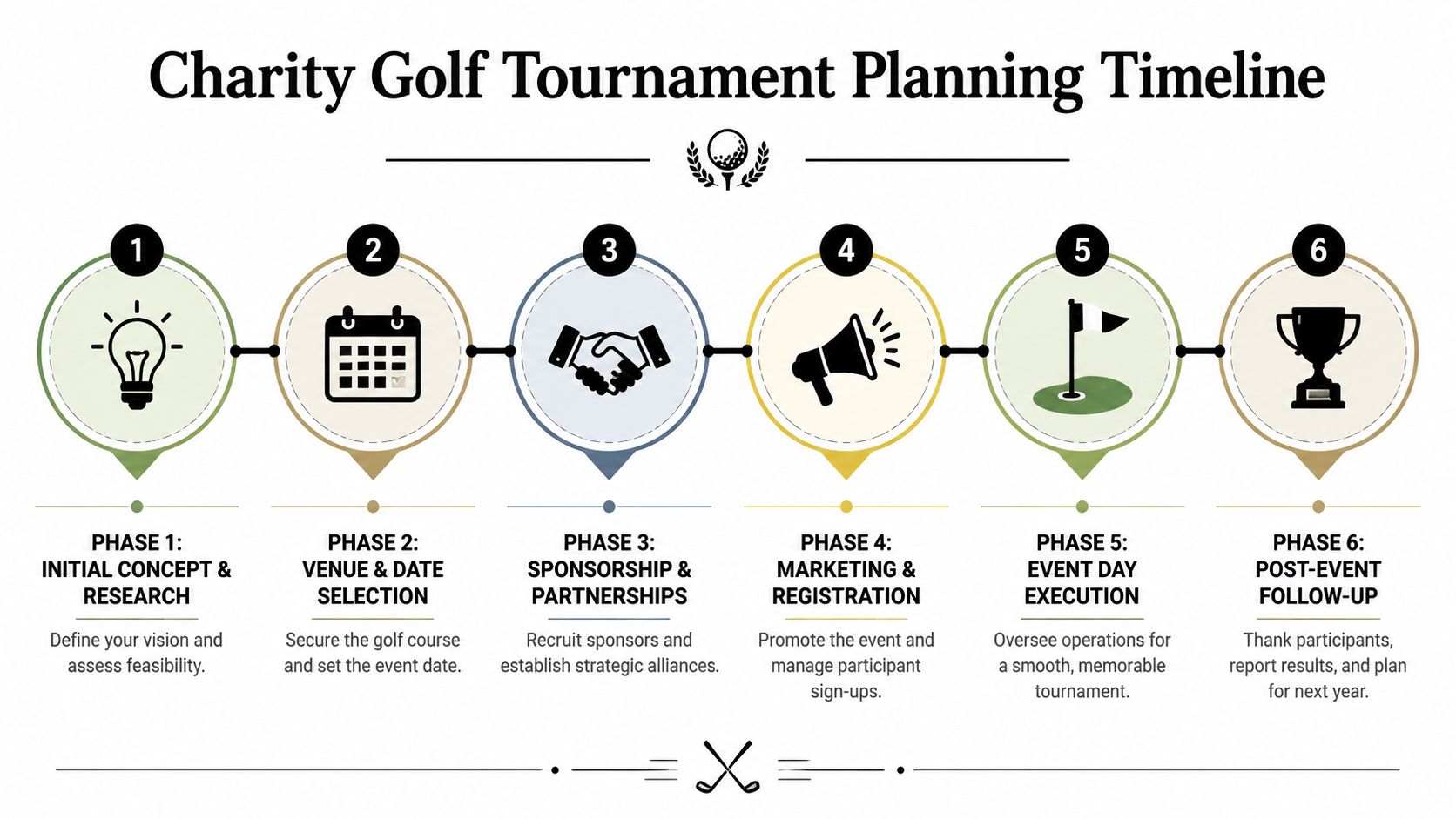
A workable planning arc is straightforward. Early on, lock the concept, audience, and host course. Then move into sponsor outreach before you spend too much time polishing player-facing materials. After that, registration, marketing, volunteer assignments, signage, check-in setup, and post-event reporting all fall into place more easily because the financial core is already stable.
What the planning timeline actually looks like
In practice, the work tends to break into six phases:
- Concept and feasibility: Decide who the event is for, what format you'll run, and whether the course, audience, and sponsor pool match the revenue target.
- Venue and date selection: Secure the course early enough that you still have room to market, recruit, and adjust.
- Sponsorship and partner outreach: Start this before public promotion. Sponsors don't like feeling like an afterthought.
- Marketing and registration: Open signups only when the event page, ticket flow, sponsor inventory, and player communications are ready.
- Event-day execution: Check-in, volunteer management, sponsor recognition, contests, food timing, and golfer flow all matter more than people think.
- Follow-up and renewal: Thank-yous, sponsor reporting, and next-year soft commitments should happen while the event is still fresh.
Practical rule: If you can't explain how the tournament makes money after course, food, and giveaway costs, you're not ready to promote it.
There's also a risk item planners often overlook. If your event uses golf carts, vendor vehicles, or any fleet support on site, sort out operations and liability details well before event week. That includes basics like route control, volunteer use rules, and, when needed, a look at insurance for electric vehicle fleets for organizations running cart-heavy operations.
Profit has to be designed in
The hard truth is that player fees alone rarely create much breathing room. Public event pages often highlight sponsorships, raffles, contests, and auction items because that's where the primary revenue mix usually sits, while the true margin question often goes unanswered on the front end. A profitable charity golf tournament depends on stacked revenue streams, not wishful thinking.
That's why experienced planners don't start with swag ideas. They start with a budget model, sponsor inventory, and a realistic view of operational complexity. Get those right, and the fun parts stay fun.
Define Your Goals and Financial Blueprint
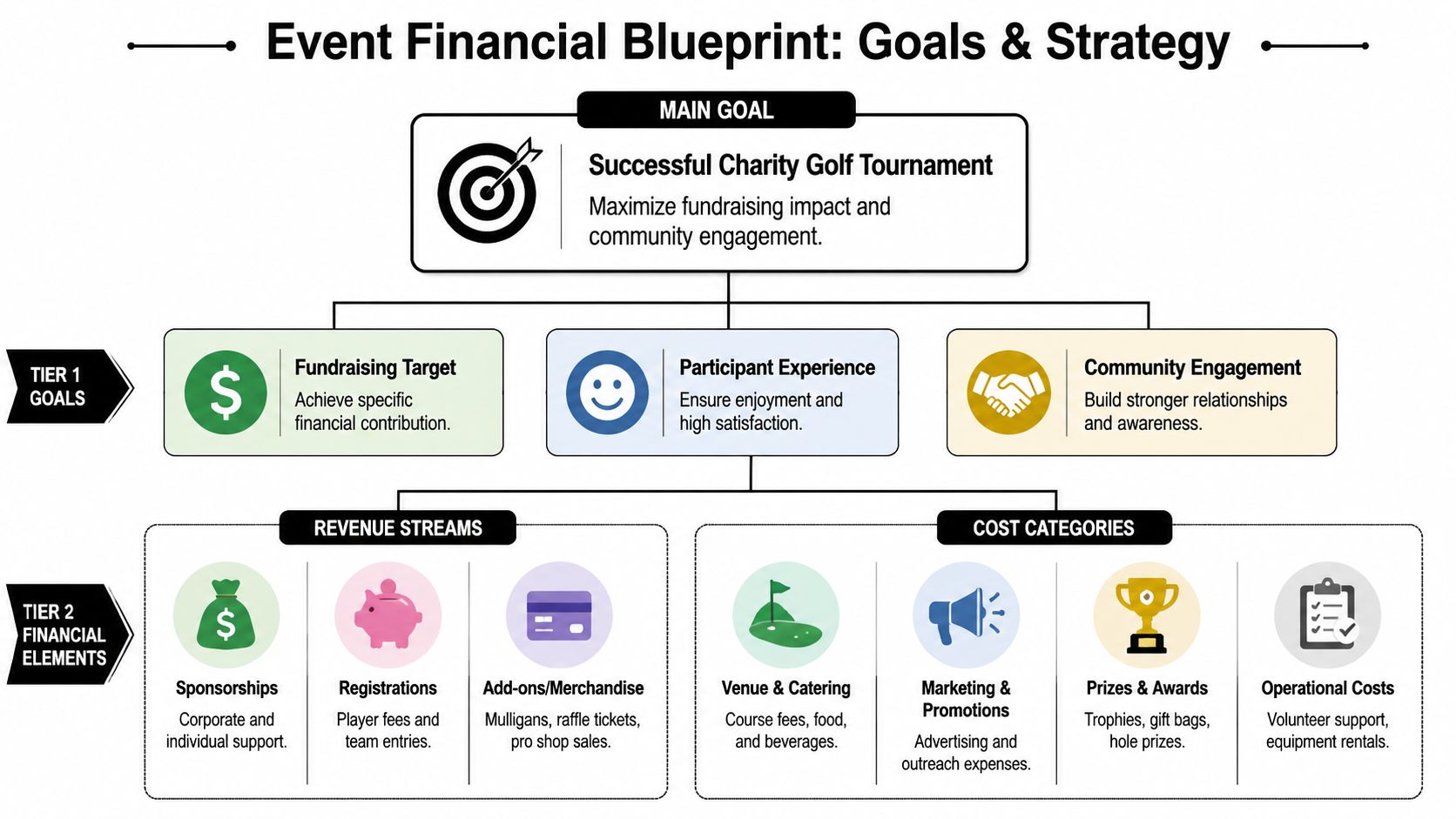
A good charity golf tournament budget isn't a list of expenses. It's a decision tool. It tells you how much pressure registration needs to carry, how many sponsorships you must close, and whether your add-on fundraising is optional or necessary.
Start with one primary outcome
Pick the main job of the event. Usually that's net fundraising. Sometimes it's sponsor relationship building, donor cultivation, or community visibility with fundraising attached. The mistake is giving all of those goals equal weight.
If fundraising is primary, say it plainly. Then define the secondary outcomes that support it, such as a smooth player experience, strong sponsor visibility, and a post-event report that helps renew support next year.
A simple planning sheet should answer these questions:
- What must the event net for the cause
- What experience can you realistically deliver at this course and budget level
- Which audiences matter most, players, sponsors, donors, or corporate hosts
- What would make this event worth repeating next year
If your team needs a broader operating framework for nonprofit events, this guide to nonprofit event management workflows is a useful companion because it forces the same discipline around goals, logistics, and follow-up.
Build the budget from cost upward
One practical planning model is to calculate a per-head fee as total event cost divided by expected player count, then use sponsor revenue and on-site fundraising to create profit, as outlined in this golf tournament planning guide. That flips the usual thinking.
Instead of asking, “What should we charge golfers?” ask, “What does each golfer cost us before we raise a dollar for the cause?” Once you know that, pricing gets cleaner.
Your cost list usually includes:
- Course-related charges: Greens fees, cart use, practice range access, and any venue staffing charges.
- Food and beverage: Breakfast, boxed lunch, beverage stations, reception meals, and service fees.
- Player-facing items: Tee gifts, printed materials, scorecards, awards, and signage.
- Operational spend: Payment processing, check-in materials, volunteer support, and contest setup.
Then map revenue into separate buckets:
| Revenue stream | Role in the model | Practical note |
|---|---|---|
| Sponsorships | Primary profit engine | Close these first |
| Player registration | Cost recovery | Price to cover the per-head burden |
| Add-ons | Margin builder | Keep offers simple |
| Raffle or auction | Variable upside | Don't rely on it to rescue the budget |
If you underprice golfers and haven't sold sponsorships yet, you're betting the event on last-minute fundraising. That's not a strategy. It's exposure.
Use a planning calendar that matches buying behavior
The same planning guide recommends securing the course about 5 months out and contacting sponsors immediately, while contacting golfers roughly 60 days in advance through a structured timeline in its tournament planning advice. That sequence matters because sponsors buy earlier than players.
Sponsors need budget approvals, logo deadlines, and internal sign-off. Golfers need a date, a clear registration page, and enough lead time to organize foursomes. If you reverse that order, you'll spend weeks filling players while your sponsor deck sits half-finished.
A clean blueprint provides an advantage. You can say yes to the right ideas, no to cost creep, and maybe to upgrades that support the margin.
Build Compelling Sponsorship Packages
Sponsors aren't filling holes in your budget out of kindness alone. They're buying visibility, access, hospitality, and alignment with a cause their customers or employees care about. If you pitch sponsorship like a donation with a logo slapped on top, you'll get hesitation. If you package it like a business opportunity, conversations get easier.
The long arc matters here. The Halliburton Charity Golf Tournament result is a strong reminder of what sustained sponsor relationships can do. Its 27th annual event raised more than $3.4 million for 101 U.S. nonprofit organizations in 2022, and the tournament had raised more than $28 million since it began in 1993. That kind of performance doesn't come from one good sponsor ask. It comes from building a repeatable sponsorship asset.
Sell exposure and access, not gratitude
Businesses want to know three things quickly:
- Who will see their brand
- Where they'll be recognized
- What makes this event worth repeating
That's why strong packages combine digital visibility, event-day presence, and some level of hospitality. A title sponsor may want naming rights, speaking time, premium logo placement, and a foursome. A smaller local business may only want a branded hole sign and a mention in pre-event emails.
If you need ideas for how to attract top golf sponsors, it helps to review examples from organizers who treat sponsorship inventory as a product catalog rather than a donation form.
What strong packages include
Keep the ladder simple. Too many tiers confuse buyers and create internal admin work. Most events do better with a short menu and a few custom add-ons for companies with specific goals.
| Benefit | Hole Sponsor ($500) | Birdie Sponsor ($2,500) | Title Sponsor ($10,000+) |
|---|---|---|---|
| Hole signage | Yes | Yes | Yes |
| Logo on registration page | Limited | Prominent | Top placement |
| Mention in event emails | No | Yes | Yes |
| Social recognition | Basic | Expanded | Priority |
| Included player spots | No | Often included | Typically included |
| Awards dinner recognition | Name mention | On-stage mention | Speaking opportunity |
| Custom activation option | No | Possible | Yes |
A few package design rules save a lot of trouble:
- Protect scarcity: Don't create five “premium” options that all promise the same visibility.
- Bundle what sponsors value: Foursomes, signage, emails, and stage recognition work better together than as scattered upgrades.
- Leave room for custom asks: Some sponsors want employee hospitality. Others want a branded contest or product sampling.
- Write deliverables clearly: Ambiguous benefits create post-event friction.
A sponsor package should read like a media buy with a mission attached.
The best sponsor relationships continue after the tournament. If a company had a good day, saw visible execution, and received a clean follow-up report, next year's ask starts halfway closed.
Master Marketing Registration and Ticketing
Registration is where a lot of otherwise solid tournaments start to look amateur. The common pattern is familiar. Someone builds a basic form, exports a spreadsheet, manually emails confirmations, then spends the final week fixing player names, team assignments, meal notes, and check-in lists.
That's unnecessary.
Keep registration simple
For most charity golf tournament setups, a clean registration flow is enough. You don't need a bloated event platform if your team already works inside Google Workspace.
A practical setup looks like this:
- Use Google Forms for intake: Capture player names, team names, sponsor affiliations, meal preferences, and add-on selections in one place.
- Route responses into Sheets: That gives you a live operations table instead of disconnected form emails.
- Separate player categories clearly: Single golfer, foursome, sponsor-included team, dinner-only guest, and volunteer should not sit in one messy list.
- Confirm immediately: People trust an event more when they get a fast, accurate confirmation.
One option for that workflow is QR code tickets for Google Sheets, which fits teams that want to stay in Sheets while creating personalized event passes and attendance flows from form or spreadsheet data.
Automate the ticketing work you should never do by hand
I've seen organizers waste hours building PDF tickets one by one, then renaming files, then searching inboxes on event morning because somebody forwarded the wrong version. It's fixable.
If your registration data already lives in Sheets, use a tool that generates one QR ticket per attendee, applies your branding, and bulk-sends the passes by email or WhatsApp. Darkaa is one example. It turns Google Sheets and Forms into a QR code ticketing and check-in workflow, including branded PDF or image tickets and scanner-based attendance tracking.
That matters for more than speed. It creates consistency. Every golfer receives the same quality of confirmation, every sponsor guest gets the same level of organization, and your team stops doing repetitive admin work.
A short walkthrough helps if your staff hasn't used this kind of setup before:
Treat confirmation emails like part of the event experience
Your ticket email isn't only logistical. It sets tone. A strong message includes arrival time, parking notes, what the QR ticket is for, how sponsor guests should identify themselves, and a contact point for roster corrections.
You can also add a thoughtful extra. For example, if you run sponsor thank-yous, prize drawings, or player gifts after the event, a small perk like digital golf gift cards can work well because it's easy to distribute without more on-site handling.
Clean registration does two jobs at once. It reduces admin load for your team and signals professionalism to sponsors before anyone reaches the first tee.
Execute a Flawless Event Day Operation
Event day doesn't need to feel frantic. The best charity golf tournament operations usually look calm from the outside because the team made a lot of small decisions early. Volunteers know their lane. Sponsors know where to set up. Golfers move from parking to check-in to carts without asking ten questions.
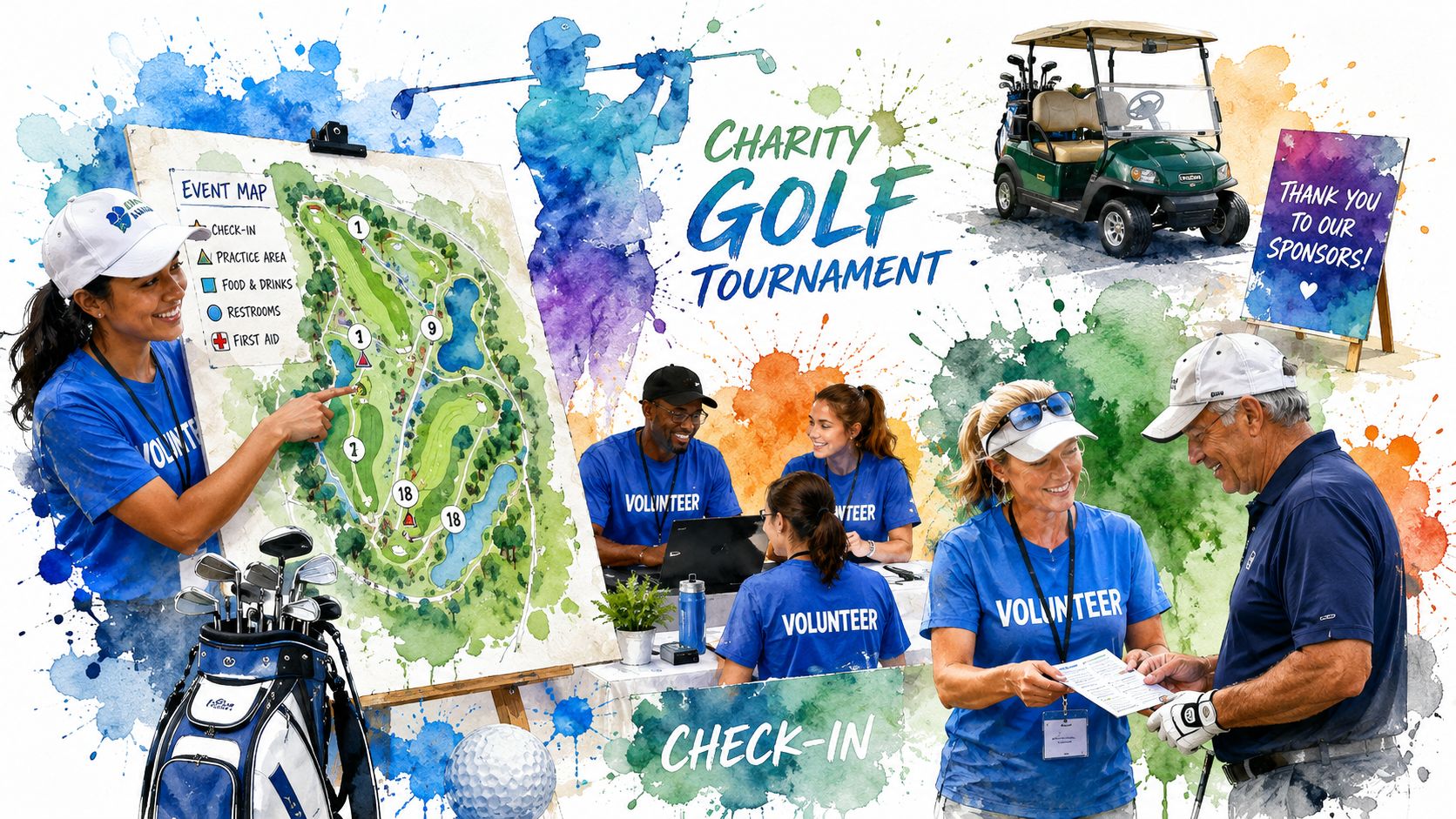
Check-in should feel invisible
The registration table is where players decide whether your event is polished or chaotic. Long lines, missing names, handwritten edits, and volunteers digging through envelopes create stress that spreads across the morning.
A better setup uses QR code ticket check-in for Sheets so volunteers scan arrivals on their phones instead of crossing names off paper lists. That gives you live attendance visibility, faster issue resolution, and fewer bottlenecks when several foursomes arrive at once. It's especially useful when sponsor guests, player substitutions, and last-minute additions all show up in the same half hour.
The operational flow should be simple:
- Greeter directs traffic: One person answers “Where do I go?” questions before they reach the table.
- Scanner verifies arrival: Volunteers scan the QR code and confirm the player or guest.
- Support table handles exceptions: Name changes, walk-ins, or sponsor swaps should not block the main line.
- Starter keeps the clock: Once checked in, golfers move toward carts, range, or breakfast without bunching up.
Fast check-in doesn't just save time. It protects the mood of the whole day.
Fundraising on the course needs restraint
One of the smartest recommendations in the charity golf space is to use a sequenced fundraising design. A strategic guide from GolfStatus recommends only two to three giving activations during the round and notes that many successful events use one or two professional fundraising activations plus a small internally run game, while keeping 80% of messaging on impact and 20% on logistics in its fundraising design guidance.
That matches what works in the field. Golfers will give when the asks feel intentional. They tune out when every third hole has a new pitch.
A restrained on-course plan might include:
- One pre-round ask: A mulligan package or raffle bundle at check-in.
- One or two mid-round activations: A beat-the-pro contest or sponsored challenge hole.
- One post-round push: Auction, paddle raise, or direct mission appeal during awards.
Volunteer roles should be narrow and clear
Don't give volunteers broad job titles like “help with registration” or “assist sponsors.” Give them one zone and one standard.
Use role cards or a shared sheet with assignments such as:
| Role | Main task | Common mistake to avoid |
|---|---|---|
| Parking lead | Direct arrivals and answer first questions | Letting cars back up near check-in |
| Check-in scanner | Scan tickets and confirm names | Trying to solve exceptions in the main line |
| Sponsor host | Help sponsors set up and stay visible | Assuming sponsors know where to go |
| Contest monitor | Run one activation consistently | Changing rules hole to hole |
| Float lead | Solve gaps and replace absent volunteers | Getting stuck at one station |
That level of clarity is what makes the day feel smooth. Not flashy apps. Not extra swag. Clear roles, clean flow, and a fundraising cadence that respects the golfers.
Maximize Post-Event Engagement and Reporting
Most organizers are relieved when the tournament ends. The smart ones treat that moment as the start of retention work. A charity golf tournament becomes durable when sponsors, players, and volunteers hear from you while they still remember the day clearly.
Sponsors need a business-grade follow-up
One common planning gap is proving financial return after the event. The issue isn't only whether you raised money. It's whether you can show how multiple revenue streams came together and how sponsor support translated into real results, as discussed in this charity tournament planning example.
Sponsors don't need a glossy brochure. They need a concise report that says:
- What they bought: Package level, included benefits, and any custom activation
- What was delivered: Signage, digital mentions, player spots, speaking time, contest branding
- What happened: Photos, attendee highlights, and visible sponsor presence
- What the event produced: Clear explanation of how the event supported the cause
Send personal thank-yous separately from the report. The thank-you should feel human. The report should feel operational.
A sponsor renews when they can retell the value of the event inside their own company.
Use attendance and response data to improve the next event
Players and sponsors leave behind useful signals if you collect them properly. Which sponsors used their included foursomes. Which guests checked in. Which tee-time windows ran late. Which packages converted early. Which volunteers handled the most traffic without issues.
That's where practical attendance reporting earns its keep. If your team tracks check-ins digitally, you can review no-shows, late arrivals, and sponsor utilization instead of relying on rough memory. A reference point like these attendance statistics for event teams can help you decide what to measure after the tournament and what to ignore.
For post-event cleanup, focus on three actions:
- Close the loop fast: Thank sponsors, golfers, and volunteers while the event is still top of mind.
- Record what occurred: Not what the run sheet said should happen.
- Start renewal conversations early: Especially with sponsors who engaged well and used their benefits.
A tournament becomes easier in year two when year one leaves behind usable data, sponsor confidence, and a documented operating model.
If you run your event inside Google Workspace, Darkaa is a practical option for handling QR ticket creation, bulk distribution, and phone-based check-in from Google Sheets or Forms without moving your team into a new dashboard.