The 2026 Washington DC Fountain Pen SUPERSHOW is scheduled for August 6 to August 9 at the Marriott Fairview Park in Falls Church, Virginia, with public admission starting at noon on August 7 and continuing through 5:00 p.m. on August 9. This is the premier Pen Show Washington DC experience, as the show brands itself as the largest fountain pen show in the world.
If you're reading this, you're probably in one of three modes. You're either deciding whether to attend, preparing to exhibit, or figuring out how to run a busy specialty event without creating a line disaster at the door. The good news is that this show rewards planning. The bad news is that walking in without a plan is the fastest way to miss the pens, inks, appointments, and conversations you came for.
Table of Contents
- Welcome to the World's Largest Pen Show
- Essential Event Details for 2026
- A Guide for Attendees Navigating the Show
- A Guide for Exhibitors and Vendors
- A Modern Playbook for Show Organizers
- Frequently Asked Questions
- Final Thoughts Before You Go
Welcome to the World's Largest Pen Show
The Pen Show Washington DC crowd isn't a casual mall crowd. It's collectors with lists, nib lovers carrying cases, shoppers hunting a specific ink, and vendors who know that one good conversation can turn into a long-term customer. That mix changes how you should approach the event.
The show's own branding calls it the largest fountain pen show in the world, and independent community coverage describes it as a major destination event that draws vendors from the East Coast and European regions. That same coverage places it inside a mature U.S. pen-show ecosystem, noting that the Baltimore International Pen Show dates back to 1986, which helps explain why serious attendees treat this calendar like a season, not a weekend hobby stop. You can read that context in the community recap of the DC Fountain Pen Super Show and the wider pen-show scene.
What matters on the ground is this. Big pen shows create two opposite experiences at the same time. They offer rare access, broad selection, and chance encounters you can't replicate online. They also create noise, crowd pressure, impulse buying, and decision fatigue.
Practical rule: At a major pen show, the people who enjoy it most are rarely the people who try to see everything.
For attendees, that means narrowing your targets before you arrive. For exhibitors, it means presenting inventory in a way tired shoppers can still understand at a glance. For organizers, it means building entry, payment, and flow systems that stay simple when the room gets busy.
That three-sided view is the only useful way to talk about this show. A newcomer wants help finding a great first purchase. A veteran vendor wants traffic that converts. An organizer wants the front door to move fast and stay accurate. All three are part of the same event, and when one side gets sloppy, everyone feels it.
Essential Event Details for 2026
You arrive on the wrong day, or with the wrong ticket, and a good pen show starts with friction at the door. At a show this large, the basics matter because they shape everything that follows, from how fast exhibitors can set up to how long attendees spend in the entry line.
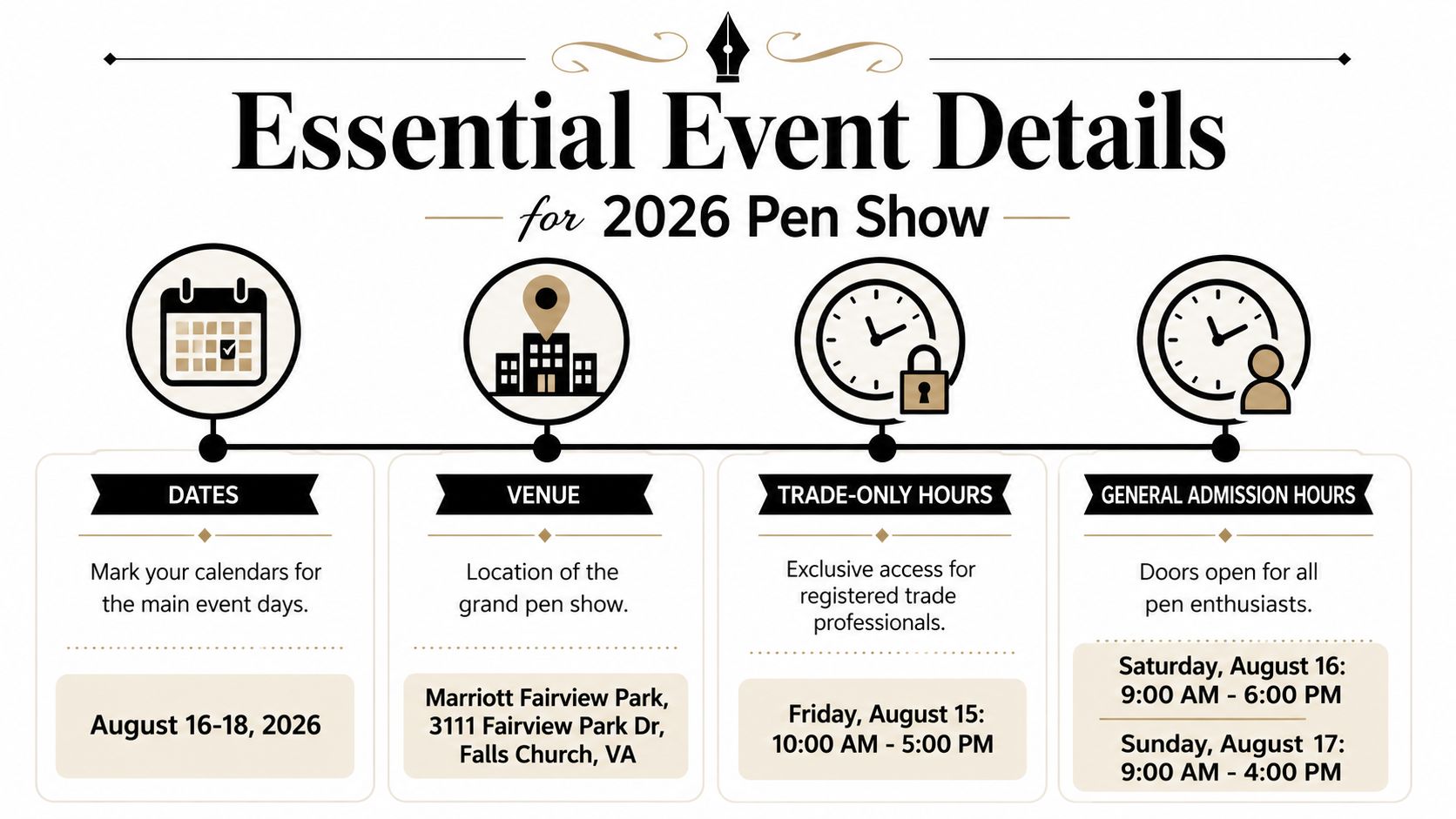
Dates and public access
According to the official DC Pen Show schedule and venue details, the 2026 Washington DC Fountain Pen SUPERSHOW runs across four days at the Marriott Fairview Park in Falls Church, Virginia.
Use the schedule this way:
- August 6: Preshow access for exhibitors and weekend traders
- August 7: Public admission begins at noon
- August 8 and August 9: Public hours run 10:00 a.m. to 5:00 p.m.
Those date differences are not minor. For exhibitors, the preshow day is working time. Tables need to be unloaded, priced, secured, and arranged so shoppers can understand the inventory quickly. For attendees, Friday opening offers a different buying environment than the weekend. For organizers, each day calls for a different staffing plan at registration, security, and the front desk.
Ticket options and how to choose
As noted in the show's published admission information, the current structure includes these options:
| Admission type | Published price | Practical note |
|---|---|---|
| Friday public admission | $25 | Best for buyers who want earlier access and first look at fresh inventory |
| Saturday public admission | $10 | Good for broad browsing, with heavier traffic at the entrance and popular tables |
| Sunday public admission | $10 | Useful for follow-up visits, lower-pressure buying, and last-day conversations |
| Weekend trader product | $50 | Includes one non-collecting significant other, so staff need a clear check-in rule for companion access |
| Children | Free | Helpful for family planning, though it still makes sense to confirm venue policies before arrival |
The trade-off is simple. Earlier access costs more, but it gives serious buyers a better shot at limited stock, repair appointments, and specific vintage pieces. Lower-cost public days work well for anyone comparing pens, testing inks, or learning the room before making a decision.
For organizers, the companion rule attached to the weekend trader product deserves special attention. It creates an exception at the door, and exceptions slow down entry if the team is improvising. A QR code ticketing setup for event check-in can help staff verify ticket types faster, but the primary fix is still clear policy training before the first rush.
Buy for your goal, not for the lowest price. If you are staffing the door, write the exception rules in plain language and keep them visible at check-in.
A Guide for Attendees Navigating the Show
Walking into a large pen show without a list feels exciting for about fifteen minutes. After that, everything starts to blur. Tables blend together, prices stop anchoring in your mind, and you end up making decisions based on adrenaline instead of judgment.
What to do before you arrive
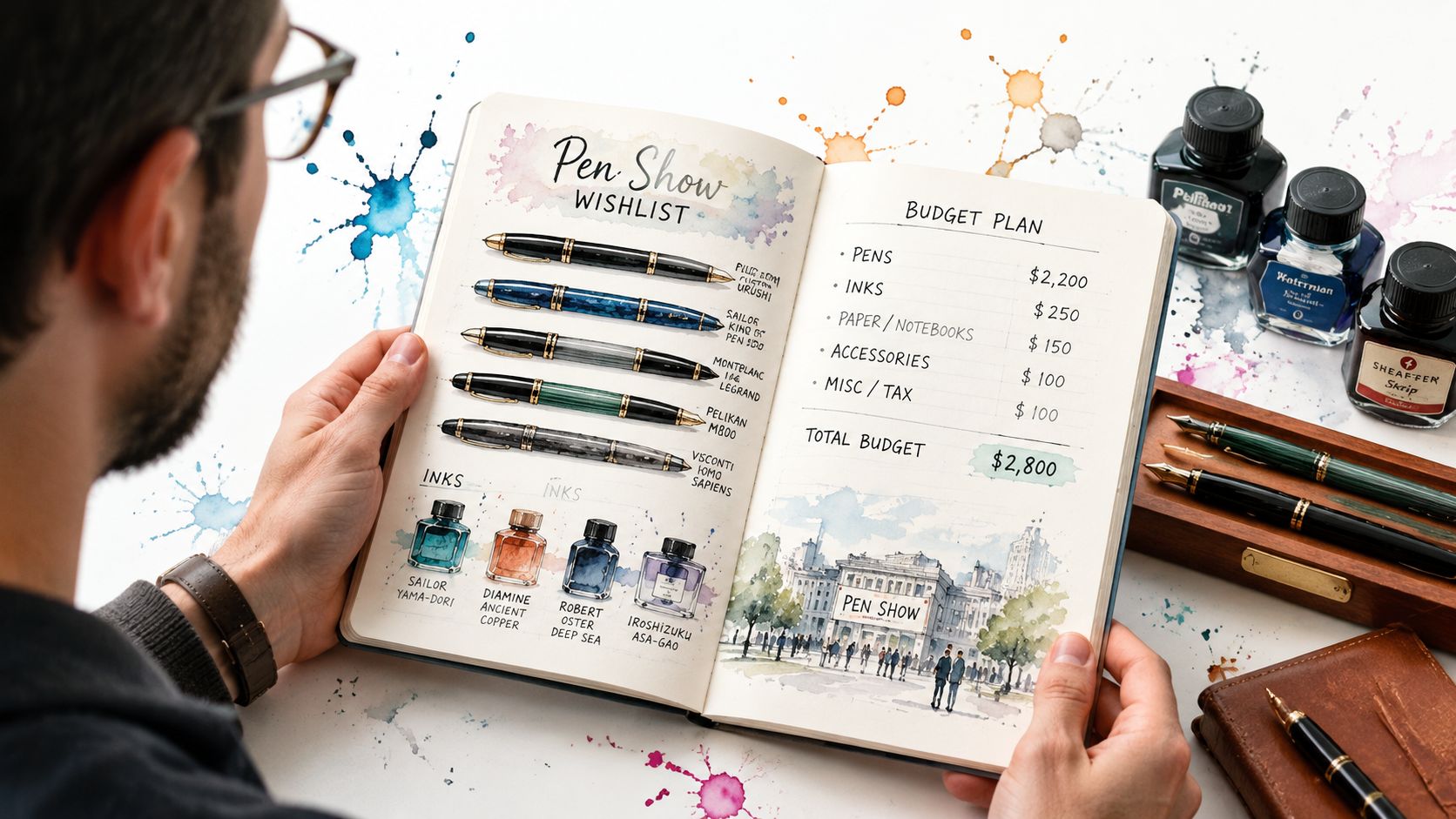
Start with a simple written plan. Not a fantasy shopping spree. A short, ranked list.
Include three categories:
- Must-find items: One or two pens, inks, or repairs that would make the trip feel worthwhile.
- Nice-to-find items: Things you'd buy only if the condition, color, or price feels right.
- Learning goals: A nib style you want to try, a paper brand you want to test, or a vintage category you want explained by someone knowledgeable.
That last category matters more than people think. Pen shows aren't only retail environments. They're one of the best places to compare materials, nib feel, filling systems, and maker styles in person.
Pack for testing, not just carrying.
- Bring fountain-pen-friendly paper: You need a surface you trust when comparing nibs and inks.
- Carry a small magnifier or loupe if you use one: It helps with nib inspection and condition checks.
- Wear comfortable shoes: You'll stand more than you expect.
- Keep your bag compact: Big backpacks are awkward in crowded aisles and frustrating for everyone around you.
A lot of first-time visitors also benefit from reading broader prep advice before the weekend. This practical guide to a QR code for event planning and attendee flow is about events generally, but the same lesson applies here: smooth experiences start before the doors open.
How to move through the ballroom without burning out
The biggest mistake attendees make is treating every table like a final decision point. It isn't. On your first pass, you are mapping the room.
Use this sequence instead:
- Handle the time-sensitive stop first. If you need nib work, a special maker, or a hard-to-find material, go there early.
- Walk a partial lap before buying broadly. You need price and selection context.
- Take notes. Pen name, table location, condition, nib, and any detail you'll forget later.
- Pause before the second major purchase. The first purchase is usually informed. The second can become emotional.
Ask before handling any pen, especially vintage or high-value pieces. Good vendors appreciate curiosity. They don't appreciate assumptions.
There's also a social skill that improves your day fast. Ask focused questions. “How does this nib compare to your other medium options?” gets you a better answer than “What do you recommend?” Vendors can work with specifics.
A short visual walkthrough can also help if this is your first major show weekend.
How to buy well instead of buying fast
The best deals at a pen show aren't always the lowest prices. Often, they're the purchases you still feel good about after the trip home.
Use a quick filter before you commit:
| Question | Why it matters |
|---|---|
| Do I understand the condition? | Especially important with vintage pieces |
| Have I tested the nib or asked how it writes? | Prevents buying a pen that only looks good |
| Would I still want this if I saw nothing else today? | Cuts impulse buying |
| Is this replacing something on my list, or just adding noise? | Keeps your budget pointed in the right direction |
For inks, rare colors can be the easiest place to overspend because bottles are small, tempting, and easy to justify. Bring discipline there too. If you love unusual inks, compare behavior as much as color. Dry time, lubrication feel, and paper friendliness matter more than a pretty swatch under hotel lighting.
Some of the best pen show moments don't involve buying anything. A good demo, a smart repair conversation, or a few minutes testing a nib you thought you'd love but don't can save you money and sharpen your taste.
A Guide for Exhibitors and Vendors
A busy pen show table doesn't automatically become a profitable one. Traffic is vanity if shoppers can't understand what you sell, what makes it special, and what price band they're looking at within a few seconds.

Bring the right inventory mix
The strongest exhibitors rarely bring only headline pieces. They bring a mix that lets people enter the table at different confidence levels.
A practical table usually needs:
- Anchor items: The premium or unusual pieces that stop people in the aisle.
- Accessible purchases: Ink, paper, entry pens, accessories, or lower-friction add-ons.
- Conversation items: Products with a story, unusual material, or niche use that invite discussion.
That mix matters because buyer intent varies all day. Some people arrive with a list and budget. Others need to handle three similar options before deciding. If everything on the table requires a long explanation or a big commitment, you'll lose the middle of the market.
A clean presentation helps more than an elaborate one. If you want booth polish without overcomplicating setup, coordinated signage and custom trade show apparel can help visitors identify staff quickly and make the table feel organized.
Make your table easy to shop
Shoppers don't experience your inventory in the order you packed it. They experience it in the order their eyes land on it.
Use simple zoning. Keep categories visually distinct. Separate vintage from modern if both are on the table. Group nib-related services or accessories in one obvious place. If you have tester pens or swatch books, place them where people can engage without blocking checkout.
Here's what usually works better than people expect:
- Visible pricing: Guests hesitate when they have to ask for every item.
- A clear test area: If customers can try paper, nibs, or writing feel without confusion, they stay longer.
- A standing explanation for your specialty: One sentence that tells people why they should stop.
What doesn't work is clutter. Too many trays at the front edge, too many handwritten labels fighting each other, or too much inventory hidden behind staff.
A pen show table should invite browsing, but it should also answer basic questions silently.
If you're collecting leads for custom work, future drops, or wholesale follow-up, build that workflow before the event. This guide to trade show QR lead capture for exhibitors is a solid model for turning booth conversations into organized follow-up instead of scattered notes.
Run the booth like a team, not a sprint
Even a friendly, energetic table can degrade by the second day if staffing is improvised. Fatigue changes everything. Product knowledge becomes shorter. Pricing errors appear. Security awareness slips.
Use a lightweight operating rhythm:
| Booth task | Best practice |
|---|---|
| Greeting walk-ups | One person owns first contact during busy stretches |
| Checkout | Keep payment and packaging tools in one fixed area |
| High-value handling | Limit who retrieves and re-shelves premium items |
| Break coverage | Rotate intentionally so nobody disappears at once |
Vendors also underuse networking at these shows. Some of your best post-show opportunities won't come from direct sales. They come from meeting other makers, repair specialists, small retailers, and collectors who remember how you presented yourself. A booth that feels calm, informed, and easy to buy from has a longer tail than the weekend itself.
A Modern Playbook for Show Organizers
The front door tells attendees whether an event is under control. They don't care how much effort went into planning if the first experience is confusion, a stalled line, or a volunteer who isn't sure what pass includes what.
The published admission structure for this show creates exactly the kind of complexity that can trip up manual processes. The official public admission page lists Friday admission at $25, Saturday and Sunday at $10 each, plus a $50 weekend trader option that includes one non-collecting significant other. That means the check-in team isn't only validating presence. They're validating rules.
Where check-in usually breaks down
Manual admission systems fail in predictable ways:
- Staff can't tell pass types apart quickly
- Companion entitlements create judgment calls
- Peak arrival windows overwhelm list lookups
- Last-minute edits don't reach every check-in point
A specialty event doesn't need stadium-scale tech to solve that. It needs a workflow that matches the inherent logic of the event. Different admission types, custom fields, companion rules, staff-friendly scanning, and a fallback when connectivity gets messy.
A workflow that reduces friction
For smaller teams, Google Workspace-based operations are often the most practical because staff already know the tools. That's why QR code tickets for Google Sheets, QR code attendance for Google Forms, and QR code ticket check-in for Sheets are useful patterns. They keep attendee data editable, searchable, and shareable without forcing the entire team into a new system.
A workable model looks like this:
- Registration data lives in a controlled sheet or form
- Each ticket carries the access logic needed at the door
- Door staff scan instead of searching manually
- Attendance status syncs back to the master list
- Staff can still validate entries if internet service gets unreliable
If you're planning a specialty event with multiple access types, this guide to event logistics planning for smoother operations is worth reviewing because it focuses on operational decisions that affect guest experience before the show floor even fills.
The best check-in system is the one temporary staff can use correctly after brief training.
Communication matters before the doors open
A clean admission workflow starts before anyone travels. Guests need the right ticket in hand, the right arrival expectation, and the right understanding of what their pass includes. Companion rules, family admissions, and schedule timing should be clear in pre-event messages so the entrance team isn't forced to educate the line.
Organizers also need a reminder system. Even niche events benefit from practical attendance messaging. If you're looking at pre-event communication strategy, this article on how to maximize event attendance with Call Loop offers useful ideas for reminding people to show up prepared, not just registered.
One final organizer trade-off is worth stating plainly. Fast entry and accurate entry are not opposites. They only become opposites when the underlying rules are vague, or the check-in tool doesn't reflect them.
Frequently Asked Questions
Is this a good show for first-time attendees
Yes, if you arrive with a short list and realistic expectations. A large show gives you broad exposure to brands, nibs, inks, paper, and vintage inventory in one place. It can also overwhelm you if you try to do everything in a single pass.
Should exhibitors focus on premium items only
No. Premium pieces attract attention, but accessible items often keep traffic converting. A balanced table gives serious collectors something to inspect and gives newer buyers a comfortable entry point.
What should organizers prioritize at the entrance
Clarity beats complexity. Staff need to identify ticket type fast, resolve exceptions consistently, and keep the line moving without guesswork. Companion entitlements and multiple access rules should be visible in the check-in workflow, not buried in a policy document.
Can families attend
Yes. The show's public admission information states that children are admitted free, as listed on the admission details referenced earlier. Parents should still plan for a crowded ballroom, protect table etiquette, and keep bags and movement tight in busy aisles.
Is cash enough, or should attendees expect card payments too
Vendor payment preferences can vary, so don't assume a single method will work everywhere. The practical move is to carry more than one payment option and ask before committing to a purchase.
How do I improve my odds of finding rare inks or special materials
Go in with priorities, ask focused questions, and make your early stops count. Rare items don't always look dramatic from the aisle. Sometimes the best finds come from a precise question to the right vendor.
Final Thoughts Before You Go
The Pen Show Washington DC experience rewards people who arrive with a plan but stay flexible once the doors open. Attendees do best when they set priorities, test carefully, and leave room for discovery. Exhibitors do best when they present a table that people can understand quickly and shop comfortably. Organizers do best when admission rules, staff training, and check-in tools all match the reality of the event.
What makes this show worth the trip isn't only the inventory. It's the concentration of knowledge in one place. You can compare pens, ask better questions, find a new maker, and sharpen your taste in a single weekend.
Leave space for that part. Some of the most useful moments won't be the expensive ones.
If you're organizing a specialty event and want a practical way to issue and validate tickets without moving your whole team into a new platform, Darkaa is worth a look. It turns Google Sheets and Google Forms into a QR ticketing and check-in workflow, which is especially useful when you need custom attendee fields, quick scanning, and a door process your staff can learn fast.